
My body in my body in my body
Trauma is one hell of a drug and it's actually my brain that's keeping the score.

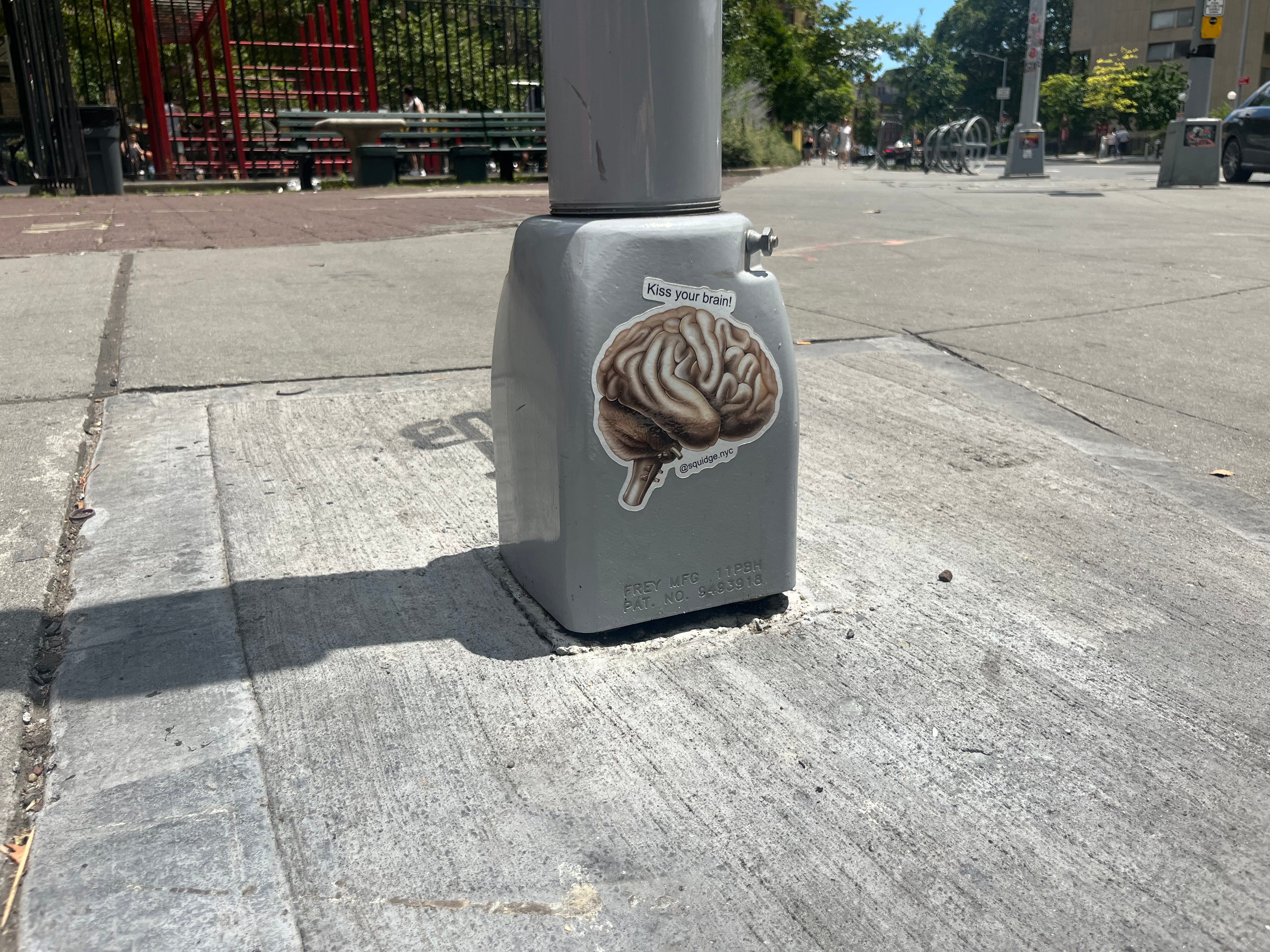
During the pandemic, reading fell away from me. I had a hard time following the words — I’d read the same sentence over and over again trying to put it in my brain. I tried to go slowly, taking one sentence at a time, but I’d inevitably find myself halfway down the page or three pages in before realizing I had no idea what was going on. Who are we talking about? Where are we?
I wasn’t retaining anything. I flipped back a few pages and started the chapter again. And again. The effort was consuming. If I’d been on a subway I would have missed my stop.
But I wasn’t on the subway. I wasn’t in New York. I was in an unsafe home in an unsafe world, everyone was sick and everything was death. For those locked down months, we all got a lot of practice enacting the self-harm of Keep Calm and Carry On. We scrounged for a sense of normalcy, our beacon, our north star, no matter the cost. If only it were normal maybe it wouldn’t hurt so much.
When it became evident that normal wasn’t possible, we learned how to make it look normal. The world was burning but we went back to work. We sought comfort. Look how normal we all are. On the one hand, what else was there to do? On the other hand, what the actual fuck?
Masks? What masks? Oh, this old thing? I hardly even notice anymore. No, it doesn’t bother me at all. I’m used to it. Aren’t you?
A few months ago I read a book for the first time in a long time. I mean I really read it. I was inside the story, engrossed in the world. I knew the characters, not just by tracking what was happening to them but by living with them. We were connected. I understood them and I loved them. I disappeared into the book for a few weeks. I’d go to the river to read one page at a time, not because it was a struggle but because I didn’t want it to end.
I’m not sure whether my total immersion was a testament to her writing or some measure of my healing. Probably a bit of both, maybe one as an invitation to the other. Certainly it was a reminder that I was finally starting to live in my body again. Actually experiencing my own life. Remembering.
When you’re dissociating all the time, it’s nearly impossible to lay down new information. Even if you’re not in crisis at any given moment, your brain is never quite sure whether or how to calm down. Your inflamed amygdala slicks the detour from neutral — if you’re ever really there — to fight or flight or freeze or fawn, while your hippocampus shrinks away from all of its logical responsibilities. It can look like you’re participating in your life, to others and to yourself, even as everything you do and say disappears from the record in your mind.
Memory formation? Forget it.
The first time I ever realized I was dissociating, I finished a sentence and had no idea what I had just said. I knew I was engaged in conversation, that is to say some humanoid shape was standing in front of me and speaking in my general direction, and I was, ostensibly, responding to it. But while I had the vague recollection of having just opened my own mouth and emitted some series of sounds, I could recall neither the words nor the intended message. I couldn’t even put my finger on the topic of the conversation.
Terror. That moment of realization is like achieving hyper-awareness while suspended in a sensory deprivation tank in a black hole in an alternate universe. I am suddenly aware that I am by virtue of the total confusion of what I am. Am I a real girl?
I’ve devoted a lot of the last three years to that question. I am a person. A real person. A whole person. I am not my brain, I am not my mind, I am not my body.
A long time ago, I used to be able to recite the exact quote that one minor character said on page 67 in a book I’d read years before. I was a sponge. What I consumed, I integrated. The book became a part of me and I could call upon it not because I had memorized it but because I had worked with it. I was in living relationship with my own experience. We were in conversation.
I was young and unwell and I learned to love my brain. It was a muscle I could exercise as much as it was a character with whom I could communicate. It was not me but it was part of me.
Now when I dissociate, a quality of mourning arises immediately alongside the fear. I can’t remember anything, and it terrifies me. I can’t remember anything, but I used to remember everything. The story evaporates as soon as I close the book. I will remember that I enjoyed it, or that I didn’t, but my ability to tell you why will fade. I know I saw that movie a few months ago, but don’t ask me to tell you what it was about.
I started writing everything down so I wouldn’t forget.
One of the hardest parts is that I can’t always tell that it’s happening until later. I remember feeling deeply immersed in a novel while I was baking by the pool over the summer. I was sure, while I was reading it, that I was really reading again. I’m laying down memory here, look at me. I know what’s happening. I’m in my body. I am here. I am real.
Now, months later, all that confidence falls apart. I remember holding the book in my hands. I can see the bright green cover in my mind. I remember the gentle snap between my fingers as chunks of pages broke away from the spine, glue melted in the desert heat. I can smell the chlorine and the sunscreen caked into my swimsuit. I can feel the burn of the hot metal chaise on my skin every time I readjust and I can hear the wind whipping the striped yellow and white pool towel behind my head.
But the novel’s plot points? I’m not so sure. What the hell was that green book about?
Often, I am not my body. For example, I am not my body when it is doing something well. When I threw the head kick in muay thai last week, I watched my partner’s eyes go wide. We were doing head kick drills — it wasn’t a surprise attack, it was an assignment. My body was executing what had been asked of it.
I came to understand that my partner’s big reaction was her realizing in real time that one could kick the head at all. She was new, she hadn’t trained like this before. I heard some chatter from the bench, T. saying: When she doesn’t kick me in the head when we spar, it’s because she’s nice, not because she can’t.
When they talk about what my body does, my instinct is to hear it not as recognition of my achievement but as commentary on an anatomical anomaly. I don’t believe it, but I also don’t fight it. I lean into it, even. Yeah, my legs are just longer than the rest of me. I shrug. Look how disproportionate I am. I reinforce the idea that my body is doing things, not me. I act like I had nothing to do with it. Which is not true.
I go to the gym and I do what I am told not because I am the teacher’s pet but because it’s the best way I’ve ever found to learn a martial art. The instructor says to kick the head, I kick the head. So when my partner is surprised, I have to reorganize myself around her communication that this is an odd thing to do. I was just doing the drill. The instructor said to do it, so I did it.
In the case of these head kicks in particular, I already know that I can reach. I have a general sense of what my body can do in the disciplines I have been training for so long. But even when an instructor asks me to do something my body has never done before, I still try. I don’t stop to consider whether or not it’s possible. I put my elbow where he says to put my elbow. I turn my foot the way she says to turn my foot.
I can’t always do what I’m being asked to do, but I go for it anyway. Sometimes I make it, sometimes I eat shit. But in those moments, I am not my body. It is not even my body, really. For a few hours every evening in that sweaty shoebox with a few uneven mats, a permanent coating of dust, and no shower, I am in this body. It’s pure embodiment, which is a kind of freedom. If that’s not enough reason to shut up and do what you’re told in the gym, I don’t know what is.
I know what that first book was about, the one I really read down by the river. It’s in there somewhere, I can feel it, and to resist accepting the effects of dissociation as a permanent state, I force myself to think. It was about play. It was about creative relationships, about the practice of making as a unit of more than one. It was about the grey space between life and art. It was about how we need each other, and how we hurt each other worst when we love each other most.
As a form of exercise, I force my brain to remember the main characters’ names. The first is easy — Sadie Green — he yells her name all the time in the book. The second is tricky — I remember his first name — Sam — but not his last, because he uses a pseudonym, which I also cannot remember. I can smell that there’s a mnemonic I can use to get there, a breadcrumb trail I’ve left for myself, if only I can remember what it was… oh yes, the name of the wise old general in the one book I’ve read most. A name I won’t forget. Smart, I tell myself. Good breadcrumbs. I pull the thread from Mazer Rackham to Sam Masur.
I can’t find the third name. I read this book in the summer, it shouldn’t be this hard. Does it start with an M? I can remember specific scenes in his story in great detail, I swear I can, I am only not detailing them here in case you read the book (which you should). I remember the title of the chapter that explores the world of the book from this third character’s perspective. But his name. What is his name?
I catch myself typing the title of the book into the search bar, I stop myself just before my pinky can reach the return key. No, I can do this. I can remember. It’s exercise. Come on, brain. Keep trying. It really sounds like this, how I talk to myself about it. There’s some coaxing. There’s some encouragement. There’s patience, gentleness, because how could there be anything else? My sweet, damaged machine. Please come back to me. Please.
I resolve not to look up the third name. I won’t even pull the book off the shelf when I get home. Is it one syllable or two? M… I will remember. Walking helps, sometimes. I’ll walk this afternoon, I’ll walk tonight. I’ll walk until I remember.
I am my body when I’ve gained weight. I am my body when it’s bloated, when it’s bleeding, when it’s in pain. When it is hunched in shame. I am my body when I don’t like how a piece of clothing looks hanging on my bones or cutting into my flesh. When I cannot figure out how to dress my body because I am not sure who or what I am or what she would wear, my body is me. While my body is never my achievement, it is reliably my failure.
Clearly this is a broken paradigm. I am not in my body, on a regular basis. I am not my body, except for when it’s in trouble. J. tells me that you can’t heal what happened over years in a span of weeks or months — he reminds from time to time because I forget. So I work to settle into however long it may take for my brain to turn on again, for my Self to come home to this body, to rest if not inside this mortal shape then at the very least somewhere closer to this plane.
It’s become hard to write now, because I crave the riddle of the third character. A two-syllable M-name? No, definitely one syllable. When I was young and unwell, and I realize now, likely also dissociated, puzzles were the only thing that tethered me to what had come to feel like normal functioning. If I was doing a puzzle, I could think. Einstein’s puzzle, crossword puzzles, early internet puzzles, flash games that required lateral thinking, which by directly opposing logical thinking, turned me on.
I didn’t always have the computer programs or the hacking skills to play the games the way they were designed, but I was not deterred. No Photoshop? No problem. To solve that clue, I printed out the intricate patterns I needed to layer together and I traced each one, one at a time, onto transparent plastic sheet protectors, which I then stacked to reveal the hidden message. I was resourceful and I was motivated, which was particularly shocking considering at the time I sometimes couldn’t lift a fork to my mouth to feed myself. M…
Now when I am lost, I still play puzzles. When I cannot find the light. It’s good medicine for me. Puzzles don’t exactly get me back into my body but they do engage my brain, and there is hope that I might be able to follow the breadcrumbs from thinking to feeling to really being here again.
I’ve been back in New York for a few years now, so I sometimes miss my stop on the subway because I’m busy reading. Really reading. Sometimes I get on a train going the wrong way because I’ve got just one more chapter and I forget to look up because I am so high on the experience of actually processing information. Retention is a different question.
I don’t want to stop because the book is good. I don’t want to stop because once I finish it, I will have to reckon with whether or not I remember it.
Marx.